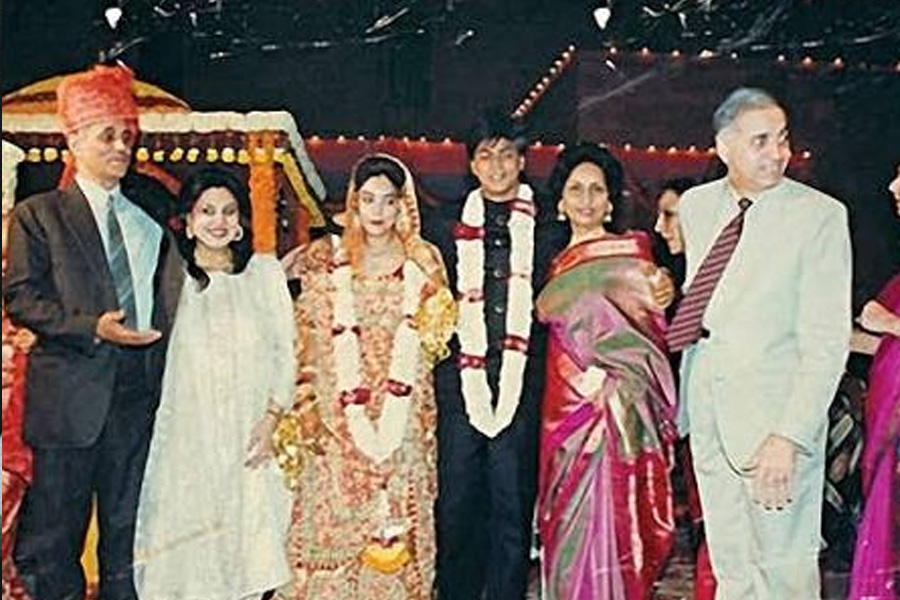
The man at the center of a widely known family
When I trace the public story of Ramesh Chandra Chhibber, I do not find a loud celebrity arc or a glossy career timeline built for headlines. I find something steadier, more grounded, and in some ways more powerful. I find a family patriarch whose name sits at the root of one of India’s most recognizable film families. He is remembered publicly as the father of Gauri Khan, the father in law of Shah Rukh Khan, and the grandfather of Aryan Khan, Suhana Khan, and AbRam Khan. That alone places him near the bright fire of modern Indian pop culture, yet his own life remains more private, more dignified, and almost sepia toned, like an old photograph kept safely in a wooden frame.
Public accounts describe him as a retired Indian Army officer, often referred to as Colonel Ramesh Chandra Chhibber. Some references use the spelling Chhibber, while others write Chibber or Chhiba, but the family identity remains clear. He was born on 25 April 1938 and died on 1 March 2016. Those dates give his life a full, fixed outline, even if many of the details inside that outline stay modest and restrained.
Family roots and personal relationships
The family circle around Ramesh Chandra Chhibber is the part of his story that is most visible to the public. I can map it clearly. His spouse was Savita Chhibber. Their daughter is Gauri Khan, born Gauri Chhibber, who later became a producer and interior designer. Their son is Vikrant Chhibber, who appears in public mentions mostly through family references. Gauri married Shah Rukh Khan in 1991, and that marriage connected the Chhibber family to one of the most famous names in Indian cinema.
The grandchildren are part of the second generation that keeps the family name circulating in public life. Through Gauri and Shah Rukh, Ramesh Chhibber is the grandfather of Aryan Khan, Suhana Khan, and AbRam Khan. Through Vikrant, public family references also link him to grandchildren named Arjun Chhiba and Alia Chhiba. The family therefore forms a wide and interlocking circle, where each name reflects into the next like moonlight on water.
What stands out to me is that the family has often been described through a balance of tradition and modern visibility. The older generation appears rooted in service, discipline, and Punjabi family life, while the younger generations live in the orbit of entertainment, design, social media, and public fascination. Ramesh Chhibber sits at the center of that bridge.
A life shaped by service, movement, and home
Ramesh Chandra Chhibber’s public persona suggests service before family. Indian Army service before his retirement. His background shapes and grounds him. Timeliness, order, restraint, and a calm command of space are commonly acquired in the military. Though not stated in the record, those attributes are easy to envisage surrounding him.
His story mentions migration. According to public reports, the family moved from Patti village in Hoshiarpur, Punjab, to Delhi around 1970. That move counts. It depicts a move from village memories to city life, from ancestral land to a new city. For many Indian families, moving is more than just changing addresses. Turning the page. Suitcase, railway platform, new neighborhood, and future rebuilt room by room.
That environment shaped Gauri Khan’s family. According to her public biography, Gauri was born and raised in Delhi in a disciplined and loving household. I think of Ramesh Chhibber as the center of a household that became a national topic.
Public image and the shadow of celebrity
The strange thing about Ramesh Chandra Chhibber is that he is widely known without ever being widely famous in his own right. His name appears most often through the lives of others. That creates a soft shadow effect. The spotlight falls on Shah Rukh Khan, Gauri Khan, Aryan, Suhana, and AbRam, but the older generation remains visible in outline, like a mountain ridge seen at dusk.
There are also public stories about his early feelings toward Shah Rukh Khan. One widely repeated anecdote suggests that the family initially had reservations about the match, which is not unusual in many homes where marriage is both personal and social. Later coverage also suggests that attitudes softened over time. This detail matters because it gives the family story a human edge. It reminds me that celebrity marriages do not happen in a vacuum. They happen inside living rooms, among parents and siblings, over worry, caution, care, and eventually acceptance.
The public record around his finances is thin, and that in itself tells a story. There is no verified portrait of him as a business magnate or a public entrepreneur. Instead, his identity stays closer to service, family, and private domestic influence. In a culture that often prizes loud success, that quieter kind of life can still leave a deep mark.
The final years and lasting memory
After dying in New Delhi on 1 March 2016, Ramesh Chandra Chhibber was cremated at Lodhi Crematorium. Gauri Khan, Shah Rukh Khan, and Karan Johar were present. Public memorial notes list Savita, Vikrant, Namita, Gauri Khan, Shah Rukh Khan, and their grandchildren Aryan, Suhana, and AbRam. The message reads like a family constellation, with each name a star linked by memory and genealogy.
His family name lives on. Gauri Khan remains a design and filmmaking icon. World-famous actor Shah Rukh Khan. Just existing in that family draws attention to Aryan, Suhana, and AbRam. But underlying all of that is the older generation, which led the household through the decades before notoriety.
I consider Ramesh Chandra Chhibber structural. The beams, not the stage. The rhythm section, not the song. The picture frame, not the pyrotechnics. That value is different and frequently permanent.
Extended family profile
The family members most closely connected to him are straightforward to name. Savita Chhibber is his spouse. Gauri Khan is his daughter. Vikrant Chhibber is his son. Shah Rukh Khan is his son in law. Aryan Khan, Suhana Khan, and AbRam Khan are his grandchildren through Gauri and Shah Rukh Khan. Arjun Chhiba and Alia Chhiba are also part of the wider grandchild generation through Vikrant. Each of these names helps build the fuller picture of the Chhibber family, which stretches from older Punjabi roots into one of the most visible celebrity families in India.
What I find most striking is how the family story contains both privacy and publicity. Ramesh Chhibber himself is not remembered for interviews, film roles, or business empires. He is remembered through kinship, service, and the long echo of a family that moved from one generation into the next.
FAQ
Who was Ramesh Chandra Chhibber?
Ramesh Chandra Chhibber was a retired Indian Army officer and the father of Gauri Khan. He is also publicly known as the father in law of Shah Rukh Khan and the grandfather of Aryan Khan, Suhana Khan, and AbRam Khan.
Who was his spouse?
His spouse was Savita Chhibber. Public family references consistently place her alongside him in notices and family mentions.
Who were his children?
His publicly identified children are Gauri Khan, born Gauri Chhibber, and Vikrant Chhibber. Gauri is the more widely known of the two because of her work in film production and design and because of her marriage to Shah Rukh Khan.
How is he connected to Shah Rukh Khan?
He is Shah Rukh Khan’s father in law through Shah Rukh’s marriage to Gauri Khan in 1991.
Who are his grandchildren?
His grandchildren through Gauri and Shah Rukh Khan are Aryan Khan, Suhana Khan, and AbRam Khan. Public family references also connect him to Arjun Chhiba and Alia Chhiba through Vikrant Chhibber.
Where was he from?
Public reporting places the family origin in Patti village in Hoshiarpur district, Punjab, with a later move to Delhi in 1970.
What is known about his career?
He is described publicly as a retired Army officer, often called Colonel. Detailed service records are not widely publicized in the material available, so his military background remains the clearest part of his professional identity.
When did he die?
He died on 1 March 2016 in New Delhi.
When Your Smile Is Telling You More Than You Think
Living Well With A European Golden Retriever
Choosing The Right Stay For The Way You Travel
How High Performing Airports Keep The Chaos Moving
The Neighborhood Search Signals That Keep Home Service Crews Working