Catharine Church Cruger in a Gilded Family Web
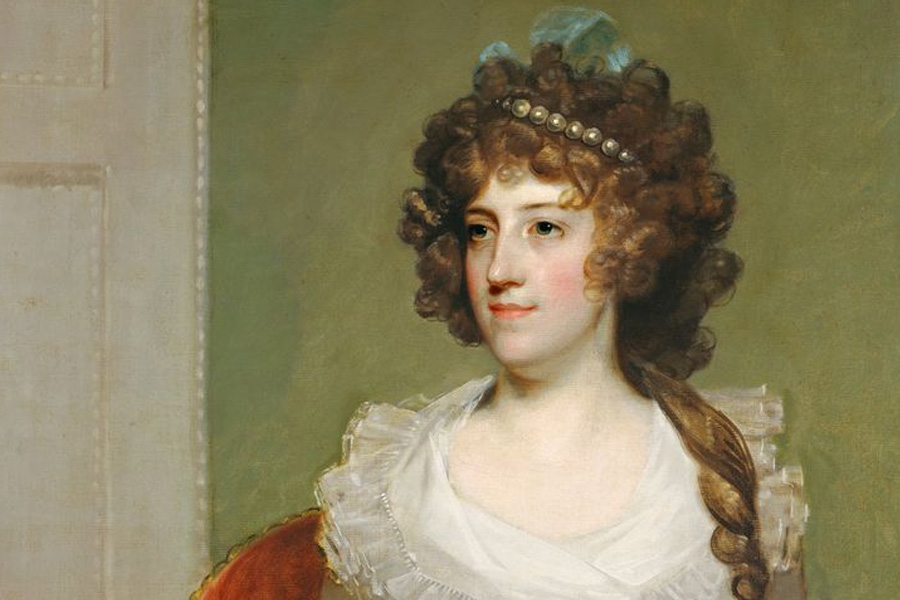
When I look at Catharine Church Cruger, I see a woman standing at the center of a wide and polished family constellation. Her life does not survive in the record as a dramatic public career or a long trail of offices held. Instead, it appears through bloodlines, marriages, children, and the social gravity of a household tied to some of the most recognizable names in early American history. She was born on 4 November 1779, lived through the birth of the republic, married in 1802, and died in 1839. Her story is partly personal, partly inherited, and partly carried forward by the family branches that grew from her.
Catharine was the daughter of Angelica Schuyler Church and John Barker Church. That alone placed her in a glittering and complicated lineage. The Schuyler side linked her to Philip Schuyler and Catherine Van Rensselaer, while the Church side connected her to Richard Church and Elizabeth Barker. Through those lines, she inherited not just a name, but a legacy that moved like a river through the history of Albany, New York, New York City, London, and the wider Atlantic world.
Her Parents, Angelica and John Barker Church
I think of Catharine’s parents as the two pillars holding up the house she was born into. Her mother, Angelica Schuyler Church, was famous for intelligence, charm, and social brilliance. She was the eldest daughter of Philip Schuyler and Catherine Van Rensselaer, and her life moved in close orbit with the major figures of the revolutionary generation. Her letters, her travels, and her presence in elite circles gave the Church family a vivid social identity. She was not simply a mother in the domestic sense. She was a force, elegant and sharp, like a candle flame that brightens an entire room.
Her father, John Barker Church, brought a different kind of energy. He was an English-born businessman, a supplier to Continental armies, and a man of substantial ambition. He moved between commerce, speculation, and politics, and his fortune rose and fell in ways that reflected the unstable early republic. He was the son of Richard Church and Elizabeth Barker. Together, Angelica and John Barker Church created a household that was both wealthy and restless, rooted in aristocratic culture yet shaped by the volatility of transatlantic enterprise.
This was the world Catharine entered. It was not quiet. It was a theater of movement, letters, travel, money, and reputation.
Siblings and the Shape of the Church Household
Catharine grew up among a large group of siblings, and each one adds texture to the family portrait. This household includes Philip Schuyler Church, John Barker Church II, Elizabeth Matilda Church Bunner, Richard Hamilton Church, Alexander Church, Richard Stephen Church, and Angelica Church. Others perished young, while others lived long. Though typical at the time, its pattern still suggests unfinished music.
One of the most famous brothers, Philip Schuyler Church lived till 1861. To 1865, John Barker Church II lived. Elizabeth Matilda Church Bunner married into another line of the family and lived till 1867. Richard Hamilton Church and Alexander Church died young, showing that wealth cannot protect a family. Richard Stephen Church lived long, but Angelica Church died early or was poorly documented.
Family was dynamic. Like a tree under high wind, each branch bent into marriage, migration, and inheritance. Catharine’s childhood was undoubtedly impacted by this continual travel, where identity comes from love and alliance.
Marriage to Bertram Peter Cruger
On 25 March 1802, Catharine married Bertram Peter Cruger. His background added another layer to the family map. He was a Dutch West Indies merchant based in London and Powys, and his parents were Nicholas Cruger and Anne de Nully Cruger. This marriage linked Catharine to a world of trade and mercantile cosmopolitanism. If the Schuylers gave her ancestry and status, the Crugers gave her another thread in the fabric of Atlantic commerce.
I see this marriage as a bridge between two eras. One side of the bridge was revolutionary and political, full of American founding families. The other side was mercantile and international, with commerce stretching toward the Caribbean and Europe. Catharine stood where those currents met.
Children and the Next Generation
Catharine’s children carry her story forward in the clearest way. The best supported family record lists four children:
| Child | Life dates | Notes |
|---|---|---|
| John Church Cruger | 1807 to 1879 | Later practiced law briefly, then lived as a gentleman farmer |
| Elizabeth Cruger Pell | 1809 to 1846 | Married Alfred Shipley Pell |
| Ann Mary Cruger Glover | 1811 to 1880 | Married Daniel Glover |
| Henrietta Julia Cruger | 1815 to 1899 | Married Henry Crisson Cruger |
John Church Cruger is especially notable because he carried the family name into the next generation and became connected by marriage to the Van Rensselaer line again. Elizabeth Cruger Pell linked the family to Alfred Shipley Pell, who helped found the Mutual Life Insurance Company of New York. Ann Mary Cruger Glover and Henrietta Julia Cruger both expanded the family web through large households of children, showing how the Cruger line continued to branch outward like ivy across an old wall.
I find it striking that Catharine’s children did not merely repeat the family pattern. They widened it. Each marriage added another name, another property, another social channel. In elite nineteenth century families, lineage was not a straight road. It was a network of doors opening into other houses.
Grandchildren and Family Continuity
Catharine’s grandkids demonstrate the family’s longevity. Eugene, Stephen Van Rensselaer, Cornelia, and Catherine Church Cruger descended from John Church Cruger. William and Alfred Walden Pell descended from Elizabeth Cruger Pell. Ann Mary Cruger Glover had a larger brood, but the list is not always clear. Genealogical records show Henrietta Julia Cruger had many offspring.
Grandchildren matter because they represent the family becoming a miniature civilization. Names like Stephen Van Rensselaer, Catherine, John, and Church are repeated intentionally. Memories become naming practice. These families inherited more than money and land. Identity was handed down like a silver spoon.
Public Life, Wealth, and What the Record Leaves Unsaid
Catharine herself does not emerge as a public official, author, or business operator. Her historical footprint is quieter. That does not make it smaller. It means her influence lived in the domestic and dynastic sphere, which for women of her class was often the main theater available. She belonged to a household shaped by inherited money, trade connections, elite marriage, and social standing.
Her father’s financial rise and later decline, her husband’s mercantile background, and her son’s later comfort suggest a family that knew both fortune and maintenance. Wealth in such families was never a simple pile of coins. It was a weather system. It could cloud, break, and clear again. Catharine lived inside that weather.
FAQ
Who was Catharine Church Cruger?
Catharine Church Cruger was an American woman born on 4 November 1779, the daughter of Angelica Schuyler Church and John Barker Church. She married Bertram Peter Cruger in 1802 and died in 1839.
Why is her family important?
Her family connected several major early American lineages, including the Schuyler, Van Rensselaer, Church, and Cruger families. These names were woven into politics, commerce, landholding, and elite social life.
How many children did she have?
The best supported family record lists four children: John Church Cruger, Elizabeth Cruger Pell, Ann Mary Cruger Glover, and Henrietta Julia Cruger.
Did Catharine Church Cruger have a public career?
No clear public career appears in the surviving record. Her historical presence is mainly through family relationships, marriage, and descendants.
What makes her life historically interesting?
Her life sits at the meeting point of revolution era ancestry, mercantile wealth, and nineteenth century family expansion. She is a doorway into a larger story of elite American lineage.
Where does she fit in the Schuyler family?
She was the daughter of Angelica Schuyler Church, making her the granddaughter of Philip Schuyler and Catherine Van Rensselaer. That placed her directly within one of the most influential families in early New York history.