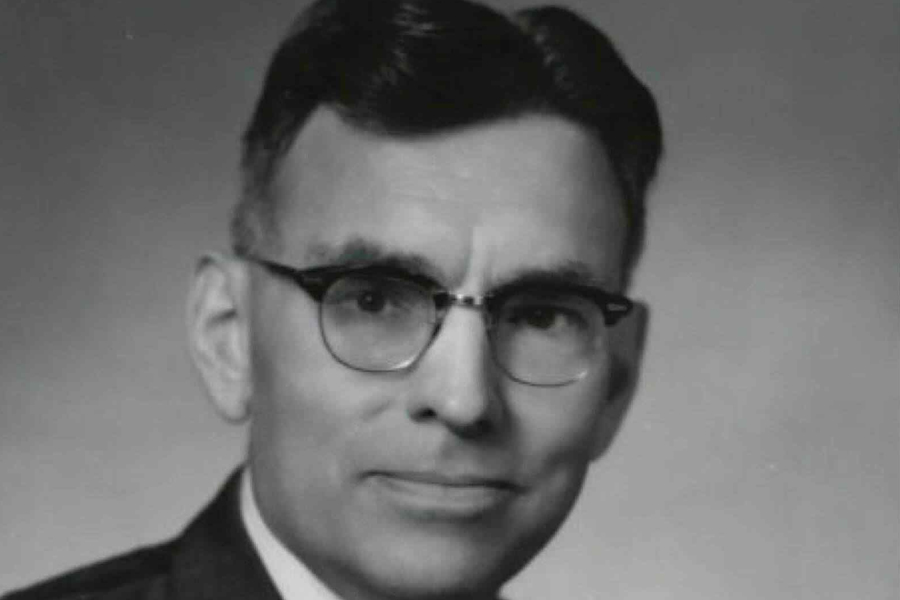
I often find myself drawn to stories of individuals who shaped not just their own eras but also the paths of their descendants, like roots anchoring a mighty tree through storms of change. Howard Homan Buffett, born on August 13, 1903, in Omaha, Nebraska, stands as one such figure. A businessman, investor, and politician, he navigated the turbulent waters of the early 20th century with a steadfast commitment to principles that echoed through his family. His life, ending on April 30, 1964, at age 60 from cancer, left an indelible mark on American conservatism and personal finance. As the father of the legendary Warren Buffett, Howard’s influence rippled outward, blending fiscal conservatism with family values in ways that continue to fascinate.
Early Life and Foundations
Howard’s beginnings were modest, rooted in a family of grocers. His father, Ernest Platt Buffett, born in 1877 and passing in 1946, owned a grocery store that provided a stable, if unremarkable, upbringing. Howard’s mother, Henrietta Duvall Buffett, who died in 1921 when he was just 18, instilled early lessons in resilience. He attended public schools in Omaha before graduating from the University of Nebraska-Lincoln in 1925 with a focus on journalism. That same year, on December 26, he married Leila Stahl, born March 18, 1904, and who would outlive him until August 30, 1996. Their union, forged in the optimism of the Roaring Twenties, became the bedrock of a family that would span generations of achievement.
I imagine Howard as a young man, poring over newspapers and market reports, his mind a forge hammering out ideas on investment and liberty. By 1926, he had founded Buffett-Falk & Co., a brokerage firm that thrived amid economic uncertainty. The Great Depression tested his mettle; he stockpiled gold coins, a crystal chandelier, sterling silver, and even a farm as hedges against inflation. These acts weren’t mere survival tactics but metaphors for his worldview: tangible assets as shields against the ephemeral promises of fiat currency.
Political Career and Ideals
Howard’s entry into politics amplified his voice. From 1939 to 1942, he served on the Omaha Board of Education, honing his advocacy for limited government. Elected to Congress in 1942 as a Republican for Nebraska’s 2nd district, he served four non-consecutive terms: 1943 to 1949, and then 1951 to 1953. His tenure, spanning 10 years in total, positioned him as a pillar of the “Old Right,” opposing the New Deal, foreign interventions, and the abandonment of the gold standard.
In 1948, he penned “Human Freedom Rests on Gold Redeemable Money,” an article in The Commercial and Financial Chronicle that warned of inflation’s insidious creep, likening it to a thief in the night eroding personal freedoms. He criticized the Truman Doctrine and pushed for declassifying CIA documents on the Korean War, believing U.S. policies provoked unnecessary conflicts. Affiliated with groups like the John Birch Society from 1959 and Americans for Constitutional Action, Howard earned a perfect 100 conservatism score from the latter. His isolationist stance, advocating against foreign aid and wars, painted him as a guardian of individual liberty in an era of expanding government.
Post-Congress in 1953, he returned to investing, but his ideals lingered. Libertarians like Murray Rothbard hailed him as an anti-Cold War warrior, a voice crying out in the wilderness against executive overreach.
Family Dynamics and Immediate Descendants
Howard’s family, a constellation of people around his values, drives his story. Three children came from him and Leila, each with their own path.
Benefactor Doris Buffett was born in 1928 and died in 2020 at 92. The Sunshine Lady Foundation, formed in 1996, provides “retail philanthropy” to domestic violence victims and educates them. Her 2010 book, “Giving It All Away,” described her method. Doris commended Howard with teaching unconditional love and generosity despite her emotionally troubled relationship with her mother Leila.
Warren Edward Buffett, born August 30, 1930, is well-known. He is estimated to be valued over $100 billion by 2023 as Berkshire Hathaway CEO since 1965. Warren often recalls Howard’s gold coin gifts as inflation-hedging teachings. Howard was a conservative and Warren a centrist, but their relationship was strong. Howard taught Warren investing and reading, which produced an empire.
Roberta “Bertie” Buffett Elliott, born in 1933, co-founded the Sherwood Foundation with her siblings in 2000 but keeps a quiet profile. Her generosity promotes education and Omaha community programs, reflecting Howard’s self-reliance.
Family has dark sides. Leila’s mood swings irritated Doris, whom she called the “black sheep.” Howard warned but emphasized his work, leaving children to handle emotions. He advised on finances, such as stocking tangibles during hard times.
Extended Family Legacy
Howard influenced his grandkids and great-grandchildren via philanthropy and ingenuity.
Grandchildren include Warren’s son Howard Graham Buffett, born December 16, 1954. The 1999-founded Howard G. Buffett Foundation fights world poverty with over $500 million in awards by 2020. His humanitarian activity in conservation and conflict zones embodies Howard’s anti-interventionist spirit.
Warren’s daughter, Susan Alice Buffett, born July 30, 1953, promotes arts and education through foundations. Warren’s youngest son, Peter Buffett, writes “Life Is What You Make It” in 2010 and explores music and philanthropy.
Great-grandchildren carry on. Since 2019, Howard Warren Buffett, Howard Graham’s son, has taught political science at Columbia University and donated.
Branches like Nicole, Erica, and Howard W. Buffett are new. Nicole, an artist, and Erica continue their charity and creative work in secret.
The prior generation included Howard’s siblings George M. and Fred W. Buffett, as well as extended relatives Sidney Homan Buffett and Evelyn Ketcham.
To visualize the family structure, here’s a simplified table:
| Generation | Key Members | Birth/Death Years | Notable Achievements |
|---|---|---|---|
| Parents | Ernest Platt Buffett | 1877-1946 | Grocer, family foundation |
| Henrietta Duvall Buffett | 1873-1921 | Early influence on resilience | |
| Howard | Howard Homan Buffett | 1903-1964 | Politician, investor, gold advocate |
| Spouse | Leila Stahl Buffett | 1904-1996 | Family supporter, journalist background |
| Children | Doris Buffett | 1928-2020 | Philanthropist, Sunshine Lady Foundation |
| Warren Buffett | 1930-present | Investor, Berkshire Hathaway CEO | |
| Roberta Buffett Elliott | 1933-present | Philanthropist, Sherwood Foundation | |
| Grandchildren | Howard Graham Buffett | 1954-present | Farmer, global hunger fighter |
| Susan Alice Buffett | 1953-present | Arts and education supporter | |
| Peter Buffett | 1958-present | Musician, author | |
| Great-Grandchildren | Howard Warren Buffett | 1983-present | Academic, political scientist |
| Nicole Buffett | N/A | Artist | |
| Erica Buffett | N/A | Charitable pursuits |
This table captures just 12 key figures, but the family exceeds 20 members across generations, each adding layers to Howard’s legacy.
Recent Echoes and Mentions
Even decades after his passing, Howard resurfaces in discussions. Amid Warren’s succession talks at Berkshire Hathaway in 2025-2026, references to Howard’s fiscal discipline abound. Social media buzzes with his gold standard advocacy, especially during inflation spikes. Posts from 2023 onward highlight his anti-war stance, with users sharing videos and threads on his libertarian roots. In 2024, blogs revisited his 1948 article amid economic debates, positioning him as a prescient voice.
I see Howard’s principles as echoes in a canyon, resounding through family philanthropy that has donated billions collectively. Warren’s 99% wealth pledge to charity, announced in 2006, traces back to Howard’s lessons on stewardship.
FAQ
Who was Howard Homan Buffett’s greatest influence on?
Howard profoundly shaped his son Warren, introducing him to investing at age 11 in 1941 and fostering a love for books that built Berkshire’s success. Yet, his conservative ideals influenced all children, steering them toward principled lives.
What made Howard Buffett’s political views unique?
His advocacy for the gold standard and isolationism set him apart. In Congress, he opposed foreign aid bills totaling billions in the 1940s and 1950s, viewing them as paths to endless wars, a stance rare among peers.
How did family challenges affect the Bufffetts?
Leila’s emotional struggles created rifts, especially with Doris, leading to periods of estrangement. However, Howard’s steady presence provided balance, teaching resilience that manifested in the family’s philanthropic empires.
What is the extent of the Buffett family’s philanthropy?
Collectively, they’ve donated over $50 billion through various foundations since the 1990s. Warren’s Giving Pledge in 2010 alone committed 99% of his fortune, while Howard Graham’s foundation focuses on agriculture, aiding millions in food-insecure regions.
How does Howard Buffett’s legacy appear in modern discussions?
In 2025-2026 retirement announcements for Warren, Howard’s role in instilling values surfaced frequently. Social media mentions, numbering in the thousands annually, often tie his gold views to current economic policies, keeping his ideas alive.