A name that lived in the shadow of history
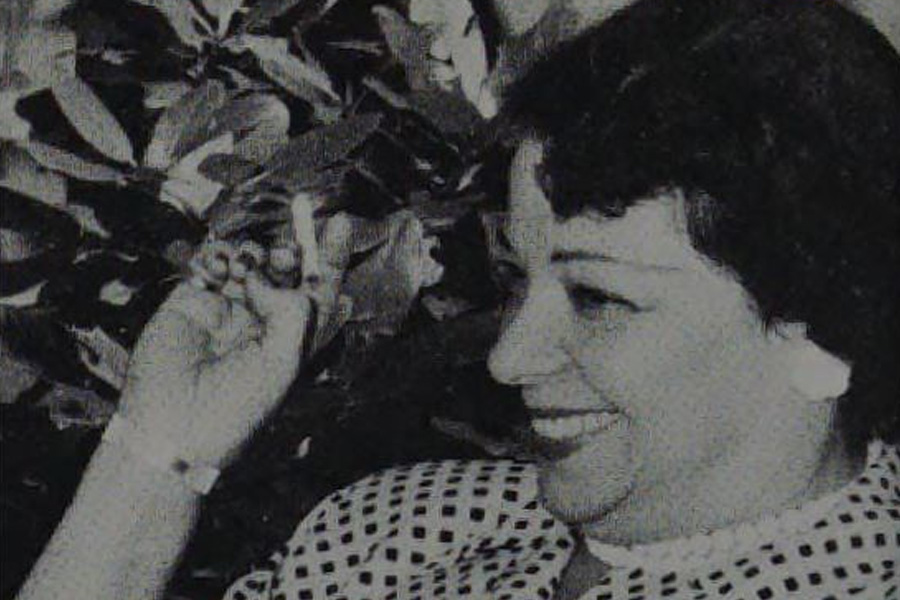
I don’t perceive Lauretta Giegerman as a publicity queen. In a drafty chamber, she lived like a candle flicker, steady yet ignored. Her name is linked to Frank Costello, the powerful mafia lord known as Francesco Castiglia, but her story has complexity, family origins, money trails, and a worthy private force.
She was born in New York County on October 28, 1894, into a milieu of immigrant aspiration, rough streets, and fast reinvention. Some family records spell her name Loretta or Lauretta, while others use Geigerman. Since Lauretta Giegerman is the focus, I spell it that way. Life, not spelling, matters most.
Lauretta married Frank Costello in New York City on September 23, 1914. That date puts her at the center of a decades-long marriage that became part of mafia, family, and urban mythology.
Family roots and the household she came from
I find Lauretta’s family background especially revealing, because it shows that she did not arrive in history as a lone figure. She came from a large household, and that household shaped her identity long before Frank Costello did.
Her parents were Jacob H. Geigerman and Cecelia Josephs. Their family appears to have been sizable, with multiple children who lived within the same orbit of New York Jewish family life in the late 19th and early 20th centuries. That background gives Lauretta a foundation that feels almost architectural, like beams hidden behind polished walls.
Here is the family structure that can be traced most clearly:
| Family member | Relationship to Lauretta | Notes |
|---|---|---|
| Jacob H. Geigerman | Father | Patriarch of the family |
| Cecelia Josephs | Mother | Matriarch of the family |
| Ruth Geigerman Mehrman | Sister | Part of the large sibling group |
| Harold Lewis Geigerman | Brother | One of the older family members |
| Jessie Johanna Geigerman | Sister | Appears in family records |
| Lauretta B. Geigerman | Herself | Born 28 October 1894 |
| Jerome Geigerman | Brother | Listed in family records |
| Sidney Dewey Geigerman | Brother | Listed in family records |
| Allen Geigerman | Brother | Listed in family records |
| Theodore Geigerman | Brother | Listed in family records |
| William Bonnie Geigerman | Brother | Listed in family records |
| Dudley Geigerman | Brother | Later reporting connects him to Lauretta |
What stands out to me is how family ties remained important even after Lauretta entered the orbit of Frank Costello. Her brother Dudley, in particular, appears repeatedly in later accounts, especially after Frank’s death. That tells me the family bond did not dissolve under the weight of Frank’s fame or infamy. It held.
Marriage to Frank Costello and the private center of a public man
Lauretta married Frank Costello in 1914, and the marriage seems to have been both durable and discreet. Frank was a towering figure in the world of organized crime, but Lauretta herself rarely appears as a public performer in that same world. Instead, she emerges as the woman who lived at the center of his domestic life.
I see a striking contrast here. Frank’s life moved like a parade through smoke and headlines. Lauretta’s life moved like a locked room with the curtains drawn. That contrast is part of what makes her interesting.
Their marriage reportedly produced no children. That fact matters because it shaped the family line, the household dynamic, and perhaps the public image of the couple. Without children, the marriage seems to have become even more tightly focused on the two of them, their home, their routines, and their wider family networks.
Lauretta was known to Frank by the nickname Bobby, which gives the relationship a more intimate edge. It suggests a private language, the kind of small detail that does not survive unless it mattered.
Personal life, homes, and money
Property and finances reveal Lauretta’s life better than biography. This may seem chilly, but property records disclose more to Lauretta than interviews.
The Costellos’ seven-room Central Park West apartment represented stability, affluence, and status. They had a Sands Point summer home. Since 1944, Lauretta has owned the residence. That detail matters. She was not just a background character. She had legal and financial visibility.
She has an interesting financial profile. The available information suggests she had no independent income and that the home had no bank account. The family’s finances seem to have been based on cash, assets, and cautious arrangements rather than modern transparency.
Her New Orleans tax case is likewise noteworthy. The episode takes Lauretta from domestic to legal and financial ramifications of Frank Costello’s actions. It shows that even a quiet person can be swept up by enormous forces.
The people around her, and the shape of her relationships
What makes Lauretta’s story vivid is the web of people around her. She was not isolated. She was surrounded by parents, siblings, husband, and the wider pressure of a family name that traveled across cities and decades.
Frank Costello remained the central relationship of her adult life, but her brother Dudley appears to have been a major companion figure later on. After Frank’s death in 1973, accounts place Lauretta in New Orleans with Dudley, which suggests she returned to a family anchor after losing the man who had defined so much of her adult life.
I find this detail almost cinematic. The great public man dies, the story seems to end, and then the private woman moves toward family again, as if the last frame of her life belonged to blood rather than notoriety.
Extended timeline of Lauretta Giegerman
| Year | Event |
|---|---|
| 1894 | Born in New York County on 28 October |
| 1914 | Married Frank Costello in New York City |
| 1910s and 1920s | Built a private life with Frank, largely outside public attention |
| 1944 | Sands Point property purchased in her name |
| 1950s | Appears in public records tied to home life and finances |
| 1957 | Seen after Frank Costello was shot in New York |
| 1973 | Frank Costello died, and Lauretta’s later life shifted toward family care |
| After 1973 | Reportedly lived in New Orleans with her brother Dudley |
Why Lauretta Giegerman still matters
I think Lauretta matters because she is a reminder that history is not only made by the loudest people in the room. Some lives are written in headlines, others in property deeds, family lists, and guarded silences. Lauretta lived beside one of the most notorious men of her era, yet her own identity does not disappear when I look closely. It sharpens.
She was a daughter, a sister, a wife, and a woman who seems to have preferred privacy to performance. Her family was large. Her marriage was long. Her public footprint was small, but not empty. That combination gives her story a strange gravity, like a star seen through fog.
FAQ
Who was Lauretta Giegerman?
Lauretta Giegerman was the wife of Frank Costello, born in New York County on 28 October 1894. She came from a large family, married young, and spent most of her adult life in a private domestic role rather than a public one.
Was Lauretta Giegerman related to Frank Costello by blood?
No. She was his spouse. Frank Costello was also known as Francesco Castiglia, and Lauretta was married to him from 1914 onward.
Did Lauretta Giegerman have children?
The available record indicates that she and Frank Costello had no children.
Who were Lauretta Giegerman’s closest family members?
Her parents were Jacob H. Geigerman and Cecelia Josephs. Her siblings included Ruth, Harold, Jessie, Jerome, Sidney, Allen, Theodore, William, and Dudley, with Dudley appearing later as an especially important family connection.
What was Lauretta Giegerman’s role in Frank Costello’s life?
She appears to have been his long term wife, private companion, and household partner. The historical material suggests a stable marriage, a quiet domestic life, and a strong personal bond.
Did Lauretta Giegerman have her own career?
The clearest description attached to her is that she had once been a showgirl. Beyond that, her life is far better documented through family, marriage, property, and legal context than through a separate public career.
What happened to Lauretta Giegerman later in life?
After Frank Costello died in 1973, reports place her in New Orleans living with her brother Dudley. Her later years remain less fully documented than Frank’s, which is part of what keeps her story partly veiled.