A family name built like a cathedral
When I look at Robert Wood Johnson III, I see more than a corporate executive. I see a bridge between old American industrial power and the quieter, more personal drama of family inheritance. Born on September 9, 1920, in New Brunswick, New Jersey, he carried a name that already rang like a bell in the halls of American business. He was the son of Robert Wood Johnson II, the grandson of Robert Wood Johnson I, and a direct heir to the Johnson and Johnson empire. That lineage gave him opportunity, but it also placed a weight on his shoulders that never really left.
He grew up inside a family where business, duty, and reputation were tightly braided together. His life moved through the twentieth century like a ship through changing weather. War, marriage, children, corporate power, disappointment, illness, and legacy all shaped him. His story is not just about one man. It is about a family that spread across boardrooms, philanthropy, sports ownership, and public memory.
The Johnson family tree and its human center
Robert Wood Johnson III was the only child of Robert Wood Johnson II and Elizabeth Dixon Ross Johnson. That fact matters, because only children in large dynastic families often become the sole vessel for expectation. He was not one of many heirs in a crowd. He was the heir.
On his father’s side, his grandfather was Robert Wood Johnson I, the founder generation figure who helped build the foundation of Johnson and Johnson. His grandmother was Evangeline Brewster Armstrong Johnson. These names are important because they mark the passage from creator to custodian. The first generation builds. The second expands. The third must prove it can carry the fire without dropping the torch.
He also had a half sister, Sheila Johnson, from his father’s later marriage. That detail adds a softer edge to a family often described in business terms. Wealthy families are usually discussed like ledgers, but they are also full of human fractures, second marriages, and shifting loyalties.
Robert Wood Johnson III married Betty Wold in 1943. She became a central figure in the next chapter of the family. Their marriage produced five children, and those children would continue to stretch the Johnson name into new public spaces. I find this part of the story especially revealing. The family was never static. It kept branching like a tree struck by sunlight from different angles.
Their children were Robert Wood Johnson IV, known as Woody, Keith Wold Johnson, Elizabeth Ross Johnson Whitall, Willard Trotter Case Johnson, known as Billy, and Christopher Wold Johnson. Some of them became highly visible. Some lived more privately. Some died young, which is one of the sharpest reminders that wealth can soften inconvenience but never abolish grief.
Woody Johnson became the most publicly known of the children, later becoming owner of the New York Jets and U.S. ambassador to the United Kingdom. Christopher Johnson also became widely recognized in the Jets organization. Libet Johnson Whitall became part of the family story in a quieter public way. Keith and Billy died young, which gives the family narrative a shadowed depth. This was not a dynasty of simple triumph. It was a dynasty with scars.
The next generations widened the family further. Woody Johnson’s children included Casey Johnson, Jaime Johnson, Daisy Johnson, Robert Wood Johnson V, and Jack Wood Johnson. Ava-Monroe Johnson is also mentioned as Casey’s daughter. The family line continued like a river dividing into smaller streams, each carrying the same old name in a slightly different direction.
A business career shaped by privilege and pressure
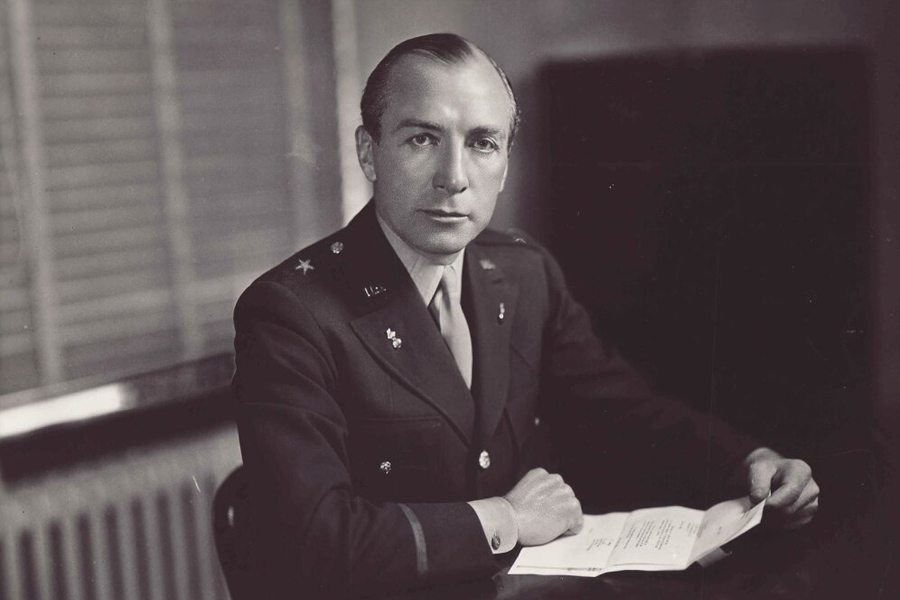
Bob Wood Johnson III joined Johnson and Johnson in 1941. WWII disrupted that route, as it did many of his generation’s life. He was an Army soldier in England, France, and Germany. Wartime duty distinguishes him as more than a corporate heir. He was a soldier before CEO.
He worked his way up the company after the war. He joined the executive committee 1954. Executive vice president for marketing since 1955. Executive vice president and general manager since 1960. He became Johnson and Johnson president in 1961. He became executive committee vice-chairman in 1963. They were not ceremonial titles. Their climb was gradual in one of America’s biggest family businesses.
He was president for significant yet problematic years. In 1965, his father fired him. Details hit like slammed doors. A family business may appear elegant but be a fire within. The succession struggle ended with Philip B. Hofmann becoming the first non-Johnson president since 1887. That transformation transformed the corporation and Robert Wood Johnson III.
He sought to start something with Johnson Industries in Menlo Park after losing the presidency. That venture was hindered by illness. The Robert Wood Johnson Foundation board appointed him president and vice president for ten years. This board service demonstrates that despite his corporate power shift, he remained connected to the family’s public influence.
Finances, inheritance, and the invisible architecture of wealth
A number, net worth, or sum that can be placed into a sentence like a coin into a slot is often requested while discussing Robert Wood Johnson III. His financial situation is complicated. Among the most significant US industrial fortunes was his. Family ownership, executive prominence, and Johnson and Johnson value accumulation made him rich.
I remember his financial life being linked from the family structure. He didn’t get rich alone. Taking over an established machine, he aided. That does not invalidate his effort. Differentiates it. He was not the only founder processing stone into ore. A steward in a built house tried to keep the walls sound when the weather changed.
Legacy through children, philanthropy, and public memory
Robert Wood Johnson III died of cancer in 1970 in Fort Lauderdale, Florida, at the age of 50. That early death closed a life that had carried enormous expectation. Yet his influence did not stop there. It continued through his children, through the Johnson and Johnson name, through the Robert Wood Johnson Foundation, and through places that still carry the family’s imprint.
I think of his legacy as a set of overlapping circles. One circle is business. Another is family. Another is philanthropy. Another is public visibility through sports and diplomacy. Together they form a complicated map. The family members do not all follow the same path, but they all move within the same gravitational field.
The Johnson family is interesting because it combines hard corporate power with deeply personal drama. There are boardrooms, yes. There are also marriages, half siblings, early deaths, and grandchildren who appear in the public eye for reasons far removed from pharmaceuticals. That combination makes the story vivid. It has the feel of a stained-glass window, where each colored shard catches light differently, but all the pieces belong to one frame.
FAQ
Who was Robert Wood Johnson III?
Robert Wood Johnson III was an American businessman and heir to the Johnson and Johnson family fortune. He was born in 1920, served in World War II, rose to become president of Johnson and Johnson, and died in 1970.
Who were his parents and grandparents?
His parents were Robert Wood Johnson II and Elizabeth Dixon Ross Johnson. His paternal grandparents were Robert Wood Johnson I and Evangeline Brewster Armstrong Johnson.
How many children did he have?
He had five children: Robert Wood Johnson IV, Keith Wold Johnson, Elizabeth Ross Johnson Whitall, Willard Trotter Case Johnson, and Christopher Wold Johnson.
What was his role at Johnson and Johnson?
He worked his way up from employee to senior executive and became president of the company in 1961. He later served as vice chairman of the executive committee.
What happened after his presidency ended?
He was removed by his father in 1965, after which Philip B. Hofmann took over as president. Robert Wood Johnson III later pursued Johnson Industries and also served on the Robert Wood Johnson Foundation board.
Why does his family remain well known today?
The family remained visible through business leadership, philanthropy, sports ownership, and public service. His son Woody Johnson became owner of the New York Jets and later a U.S. ambassador, while other descendants stayed in the public conversation through family and legacy.